Play Therapy for Children in Bangalore & Online
Supporting Emotional Regulation, Expression & Resilience
“Children don’t say, “I had a hard day; can we talk?”
They say, “Will you play with me?””
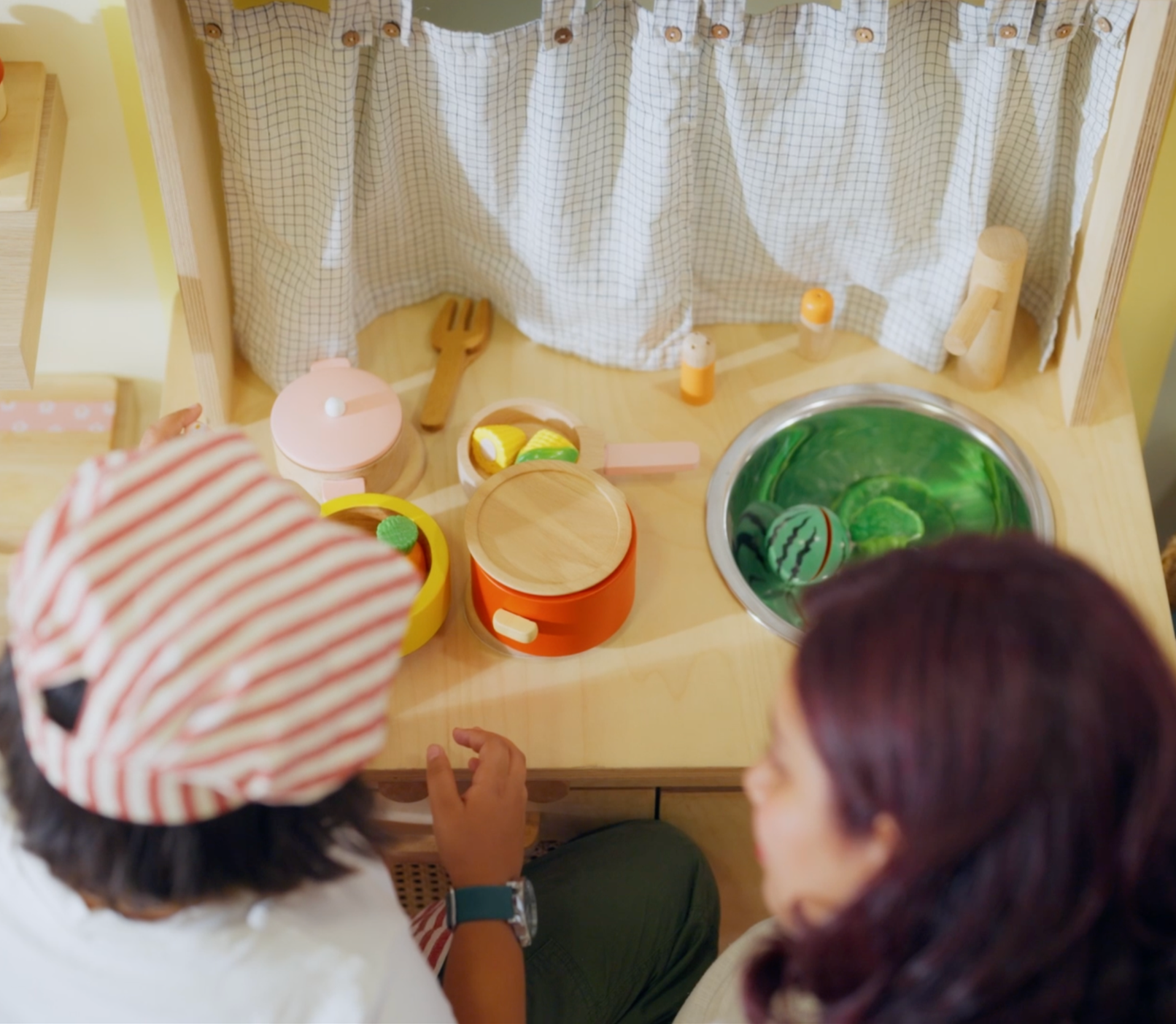
When children are struggling emotionally, they don't always tell us directly.
Sometimes they become angry. Sometimes they withdraw. Sometimes they cling, shut down, stop sleeping well, or fall apart over things that seem small. Sometimes they act out in ways that feel hard to understand - or shut down in ways that feel impossible to reach.
Children communicate distress differently from adults. Often, they communicate it through play.
I'm Anya Reddy, a Certified Synergetic Play Therapist based in Bangalore. I work with children aged 3–17 and their families - in person in Bangalore and online - helping children process difficult experiences, build emotional regulation, and feel genuinely safe in themselves and their relationships.
📍 In person in Bangalore · Online for families across India and internationally
Why Work With Anya
Not every play therapist also works closely with parents.
As both a Certified Synergetic Play Therapist and a PCI® Certified Parent Coach, I understand your child's inner world - and yours. The two are deeply connected. When parents feel more regulated, supported, and attuned, children feel it. When children build emotional safety in therapy, families feel it at home.
This dual training shapes everything about how I work. I'm not just supporting your child in a room. I'm supporting the relational system around them.
What makes this approach distinctive:
Synergetic Play Therapy: A research-informed model integrating nervous system regulation, attachment theory, and interpersonal neurobiology. I don't simply observe your child's play; I actively support regulation, safety, and connection in the room.
Trauma-informed and neurobiologically attuned: Therapy works with the nervous system, not against it.
Neurodiversity-affirming and LGBTQIA+ affirming: Tailored to each child's unique profile and family context.
Dual expertise in children and parents: I also serve as a Consultant Parent Coach with Humm Care, supporting working parents across organisations including Google, Accenture, and Wipro.
Whether your child is in the room with me in Bangalore or connecting from across the country online, they receive focused, personalised therapeutic support in a space built for healing.
What Is Play Therapy?
Play therapy is a form of psychotherapy designed specifically for children. It recognises that play is a child's first language - how they explore emotions, process experiences, and make sense of the world around them.
Play is not a distraction from a child's emotional experience. It is often the way that experience is expressed, explored, and understood.
I practise Synergetic Play Therapy, which means I don't just set up a play space and watch. I am actively present - co-regulating, attuning, and supporting your child's nervous system throughout each session. Therapy is relational, body-based, and developmentally grounded.
At times, work may also include parent-focused approaches such as Filial Play Therapy, depending on your child and family's needs.
Maya’s Story
(name changed to protect confidentiality)
Maya was six years old when she began therapy following a significant separation in her family. In one session, she placed three toy eggs into a sand tray - two nestled together in a nest, and one buried beneath the sand.
I gently reflected:
"I notice two eggs resting together, and one hidden under the sand. I wonder what it's like for that egg to be separated."
Through symbolism and metaphor, Maya was able to express feelings that felt too big for words. Over time, her play revealed deeper emotional themes - supporting her sense of safety, clarity, and emotional strength.
This is the quiet power of play therapy: healing through metaphor, movement, and meaning.
In a Child’s Own Words
"I am happy because Anya is friendly."
— Shivani, age 5*
How Play Therapy Supports Your Child
Through play therapy, children are supported in:
Building emotional regulation and resilience
Processing fear, anger, grief, confusion, and other complex emotions
Feeling genuinely seen, heard, and supported without judgement
Developing greater emotional awareness and self-confidence
Strengthening their sense of safety - in themselves and in their relationships
Sessions are child-led and unfold entirely at your child's pace, without pressure or expectation.
Who is Play Therapy For?
Families often reach out when a child seems overwhelmed, anxious, withdrawn, emotionally reactive, struggling with transitions, finding school difficult, or carrying experiences that feel hard to make sense of alone.
Children do not need to be in crisis to benefit from therapeutic support. I work with children and teens aged 3–17, and therapy is always tailored to each child's unique developmental stage, personality, and family context.
Play therapy can be especially helpful for children experiencing:
Emotional distress: anxiety, sadness, fears, nightmares, withdrawal (Read: Why Your Child Melts Down After School → blog post)
Behavioural challenges: emotional outbursts, aggression, defiance (Read: Why Your Child Explodes Over Small Things → blog post)
Relational stress: separation, divorce, grief, loss, adoption
Trauma and overwhelm: bullying, exposure to violence or neglect
Social or school difficulties: withdrawal, attention challenges, school refusal
What To Expect: The Process
Step 1: Complimentary 15-Minute Discovery Call: We connect briefly to understand your concerns and explore whether play therapy feels like the right fit for your family.
Step 2: Initial Consultation (75 minutes): A deeper conversation to understand your child's history, current challenges, and emotional needs. Together, we clarify therapy goals.
Step 3: Ongoing Play Therapy Sessions (40 minutes): Consistent weekly sessions build emotional safety, trust, and therapeutic momentum over time.
Step 4: Parent Support Throughout: Parents receive thoughtful reflections, updates, and guidance to support emotional growth at home - while always respecting the child's therapeutic space.
What Families Say
Emotional Regulation, Anger & Big Feelings
“We've started seeing steady, meaningful progress in how he manages his big emotions. He was struggling with anger outbursts, meltdowns, aggression, and impulsive reactions - and while this journey is still ongoing, the changes we're noticing are truly encouraging.
Yuvaan is slowly learning to pause, express himself more clearly, and cope with overwhelming feelings in healthier ways. There's a visible softness in how he processes situations now, and as parents, we feel more supported in understanding his emotional world.
We're grateful for the calm, patient, and structured space Anya provides.”
— Khushboo Pirgal, Bangalore
Anxiety, Emotional Safety & Growing Confidence
“Over the past year, Anya has been such a beautiful presence in our daughter's life. Choosing Play Therapy and choosing Anya was one of the best decisions we ever made for our child.
Anya created a trustworthy, cosy virtual space where our daughter felt safe to be herself. Seeing her slowly grow in confidence and begin to take up space without apologising for it has been incredible.
What touched us most was the bond Anya built with her. Even though our daughter is usually shy, she genuinely looked forward to sessions every week. Anya has a special way of helping children feel deeply heard and understood.”
— Sneha, mother to a 10-year-old, Singapore (Online Play Therapy)*
Supporting Both Child and Parent
“Play Therapy with Anya has been instrumental in my child's growth and emotional development. Alongside supporting my child, Anya also helped me reflect on the environment around him and the changes we could make as a family.
My child has become more expressive, communicative, and emotionally open. I feel far more equipped to navigate the challenges ahead, and deeply grateful for Anya's reassuring guidance and patience throughout this journey.”
— Meera, parent, Bangalore*
All testimonials shared with permission. Some names and identifying details have been adjusted to protect confidentiality.
In this short video, you'll see how children express emotions, build trust, and process experiences through play - and how I work alongside parents to support emotional growth at home.
Looking for a More Involved Parent-Child Approach?
In some situations, I may recommend Filial Play Therapy - a parent-child therapeutic model where caregivers are gently guided to use therapeutic play skills directly with their child.
This can be especially helpful for:
Strengthening attachment and emotional connection
Supporting children through relational stress or transitions
Helping parents become a more confident emotional anchor for their child
Reducing conflict and emotional disconnection at home.
Frequently Asked Questions
What is Synergetic Play Therapy?
Synergetic Play Therapy is a research-informed approach that integrates nervous system regulation, attachment theory, mindfulness, and interpersonal neurobiology. Rather than simply observing a child's play, the therapist is actively present - supporting emotional regulation, relational safety, and deeper integration through the therapeutic relationship itself.
Will my child be forced to talk about their feelings?
No. Children are never pressured to speak before they feel ready. Play Therapy respects each child's pace and natural forms of expression - through play, movement, metaphor, creativity, and symbolic exploration. Many children communicate most freely without words.
How long does Play Therapy usually take?
A minimum of 12 sessions is generally recommended to allow emotional safety and trust to develop. The overall length depends on your child's needs, the nature of the challenges, consistency of sessions, and parent involvement. Weekly sessions are recommended, especially in the early stages.
Are parents involved in the process?
Yes. While sessions focus on the child, parents receive regular reflections, updates, and guidance throughout. In some situations, I may also recommend Filial Play Therapy, where parents become more directly involved in therapeutic play with their child.
Is online Play Therapy effective?
Yes. Online Play Therapy can be deeply meaningful and effective when adapted thoughtfully to the child's developmental needs. I work with families in Bangalore and internationally through carefully structured online sessions that prioritise connection, safety, creativity, and emotional engagement.
Ready to Take the First Step?
You do not need to know whether Play Therapy is the right next step before reaching out. If something feels difficult, stuck, or overwhelming for your child - we can talk about it together and decide what kind of support would be most helpful.