Nature-Based Play Therapy for Children in Bangalore
Outdoor play therapy supporting emotional regulation, resilience, and connection in children.
“It is in playing and only in playing that the individual child is able to be creative and to use the whole personality.”
Some children seem to come alive outdoors.
They are calmer. More talkative. More themselves. The child who shuts down at a table, or melts down in a classroom, or goes quiet in a room - finds something different beneath a tree, on a patch of grass, by moving water.
You may have noticed this in your own child for years without having a name for it.
Nature-Based Play Therapy offers a name - and a therapeutic framework built around it.
Rather than expecting these children to do their most vulnerable emotional work in an indoor room, Nature-Based Play Therapy brings the therapeutic process to the environments where they naturally feel safest, most regulated, and most expressively free.
I'm Anya Reddy, a Certified Synergetic Play Therapist based in Bangalore. I offer Nature-Based Play Therapy in carefully selected outdoor spaces across the city - for children whose emotional world opens up more readily in nature than within four walls.
📍 In person in Bangalore
An Example of the Work
(details changed to protect confidentiality)
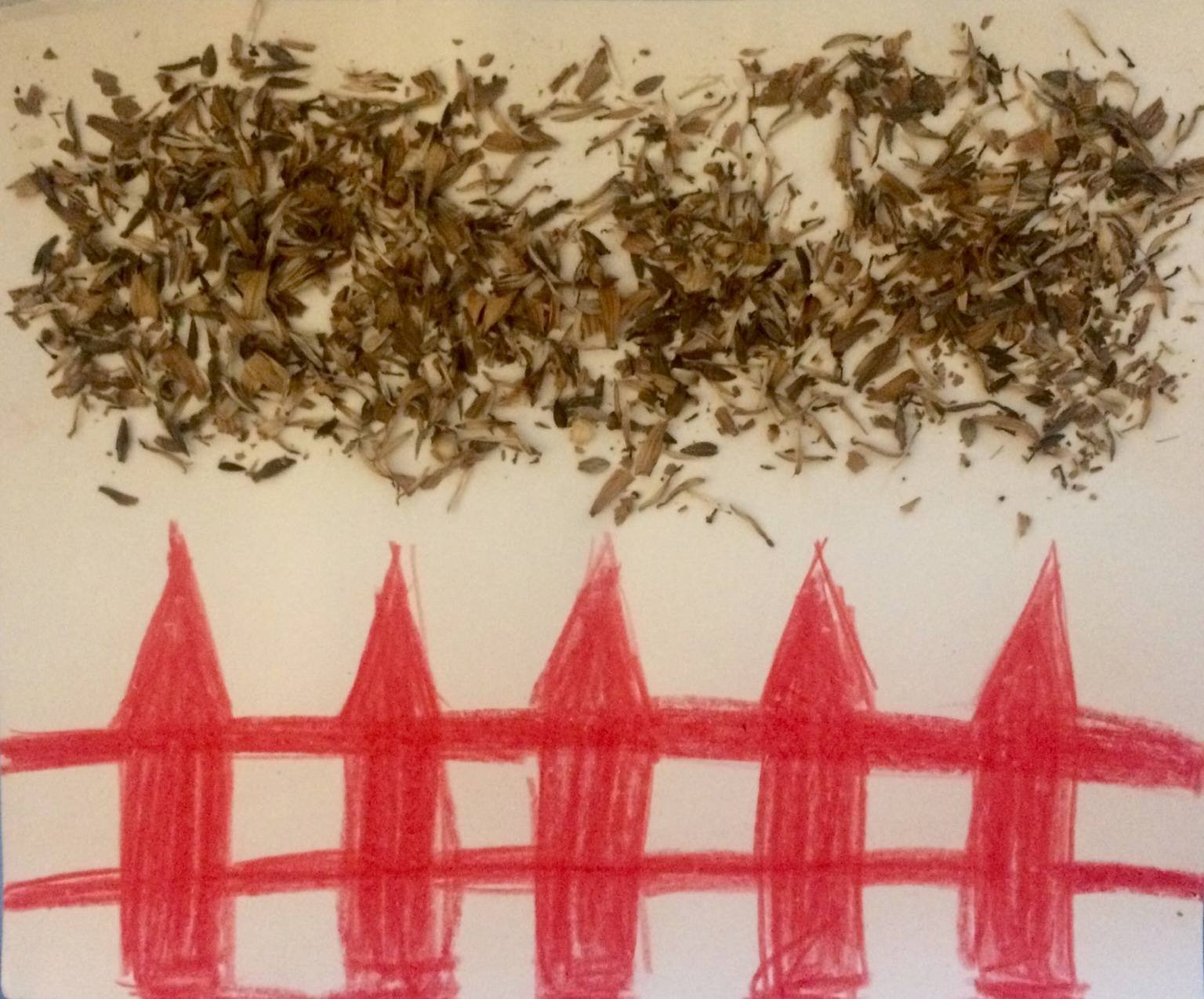
In one session, a seven-year-old who had said very little during several indoor therapy sessions arrived at an open green space, picked up a stick, and began drawing circles in the earth.
"That's my family," she said, without being asked.
She pointed to each circle - naming her parents, her brother, herself - and then drew a large oval around all of them.
"And that's the fence," she said.
In fifteen minutes outdoors, she communicated something she hadn't found a way to express in a room.
For some children, outdoor environments create opportunities for emotional expression that can be more difficult to access indoors. The therapy remains the same; the environment simply allows different parts of the child to emerge.
Why Work with Anya for Nature-based Play Therapy
Nature-Based Play Therapy requires more than bringing a child outside. It requires a therapist who can hold the therapeutic relationship, track the child's nervous system and emotional state, and understand the symbolic meaning of what a child is expressing through outdoor play - all within an environment that is, by nature, less contained than a room.
As a Certified Synergetic Play Therapist, my training specifically integrates somatic and embodied approaches - recognising that children regulate, attach, and express themselves through the body as much as through words or symbolic play. This makes it particularly well-suited to outdoor therapeutic work, where movement, sensory experience, and the natural environment become part of the healing process.
I bring to this work:
Synergetic Play Therapy training: integrating nervous system regulation, emotional attunement, somatic awareness, and attachment-informed care
Trauma-informed practice: understanding that for some children, nature offers a quality of safety and de-arousal that indoor environments cannot replicate
Clinical rigour: outdoor sessions are planned with the same intentionality, ethical care, and therapeutic structure as indoor work
Dual expertise in children and parents: as both a play therapist and a PCI® Certified Parent Coach, I support the whole family system, not just the child in the session
Nature is not used as entertainment or recreation. It is integrated intentionally and therapeutically to support emotional regulation, symbolic expression, nervous system integration, and relational healing. Nature is not simply the setting for therapy. For many children, the natural environment becomes an active part of the therapeutic process, inviting exploration, creativity, movement, symbolism, confidence-building, and connection.
What is Nature-based Play Therapy?
Nature-Based Play Therapy combines the principles of Child-Centred Play Therapy, Synergetic Play Therapy, and somatic and sensory-informed approaches with carefully chosen outdoor environments.
Sometimes referred to as outdoor play therapy, play therapy in nature, or nature therapy for children, Nature-Based Play Therapy offers an alternative therapeutic environment for children who benefit from movement, sensory experience, open-ended exploration, and embodied forms of emotional expression.
Children naturally communicate through movement, sensory experience, imagination, and relationship. For some children, natural environments create opportunities for emotional expression, regulation, and therapeutic exploration that feel more intuitive and less pressured than a room.
What makes this approach therapeutically powerful is not the outdoors itself - it is how children use it. A fallen branch becomes a bridge, a wand, a boundary, or a fishing rod. A tree becomes a place to hide, to observe, or to rest. Building a shelter may reflect a child's need for safety or protection. Water play may symbolically express emotional flow or overwhelm. Collecting and arranging natural materials may mirror a child's attempt to create order, meaning, or beauty from something that feels chaotic inside.
These symbolic communications are the same language that play therapists recognise in sand trays and doll houses - expressed, for some children, most freely in the open air.
The therapeutic relationship remains central throughout. The outdoor environment is the context; the relationship is still the agent of change.
Why Some Children Respond Differently Outdoors
Some children seem to regulate, connect, and express themselves differently when they are outdoors.
Natural environments can reduce some of the pressures children experience in highly structured settings while creating opportunities for movement, exploration, sensory engagement, creativity, and play. For children who feel confined, overwhelmed, or disconnected indoors, nature can sometimes create a greater sense of freedom, curiosity, and emotional ease.
Outdoor environments can also provide opportunities for children to experience competence, agency, and confidence through exploration, problem-solving, and manageable challenges. These experiences can support emotional growth while helping children develop a stronger sense of trust in themselves and their abilities.
Who Nature-based Play Therapy is For
Nature-Based Play Therapy may be especially supportive for children who seem more regulated, expressive, or emotionally open outdoors than in traditional indoor settings. Families often consider this approach when a child feels emotionally "stuck" inside conventional therapeutic environments, struggles with sensory overwhelm or indoor confinement, or has already shown their parents that something opens up for them in nature that closes in a room.
It can be particularly helpful for children experiencing:
Anxiety, emotional overwhelm, or persistent stress (Read: Why Your Child Melts Down After School)
Emotional dysregulation or difficulty managing big reactions (Read: Why Your Child Explodes Over Small Things)
Sensory sensitivities or a strong need for movement and embodied experience (Read: Why Some Children Need Everything Their Way)
Emotional shutdown, withdrawal, or difficulty expressing feelings verbally (Read: When Your Child Says "I Don't Know" to Everything)
Grief, family transitions, or relational stress
School-related challenges, social difficulties, or low confidence
Attachment-related difficulties
Nature-Based Play Therapy is not necessarily better than indoor therapy. It may be a better fit for some children based on their temperament, sensory profile, nervous system, and therapeutic needs. This is always assessed collaboratively.
What Happens During Sessions
Sessions are paced and shaped by the child. There is no script, no structured outdoor curriculum, and no expectation of specific activities.
Children are invited to follow their curiosity, interests, and play themes while I support emotional safety, co-regulation, reflection, and therapeutic exploration alongside them. Some children want to move - to climb, balance, run, or dig. Some want to collect and arrange natural materials. Some begin to talk in ways they haven't indoors. Some simply play, and through that play, begin to express what they couldn't find words for.
Children are never directed toward specific activities and never pressured to engage before they feel ready. The session follows the child - and I follow what the child is communicating.
Sessions take place in parks, gardens, or other carefully selected green spaces across Bangalore, depending on the child's emotional needs, sensory profile, developmental stage, and therapeutic goals.
Safety, Ethics & Confidentiality
Nature-Based Play Therapy requires thoughtful clinical planning, ethical consideration, and ongoing assessment. This is not a casual approach.
At Play Therapy with Anya:
Outdoor sessions are conducted with clear therapeutic intention and clinical structure
Parents complete informed consent documentation that includes specific considerations for outdoor work
Safety considerations are carefully assessed for each child and each location
Outdoor spaces are selected thoughtfully with privacy, containment, and suitability in mind
Therapeutic boundaries are maintained throughout
Confidentiality is discussed transparently, including the specific realities of working in semi-public outdoor spaces
Not all children are appropriate candidates for outdoor therapeutic work. Recommendations are made collaboratively, based on emotional, developmental, sensory, relational, and safety considerations.
What to Expect
Nature-Based Play Therapy sessions are typically 50–60 minutes and offered as an ongoing weekly process, consistent with other forms of Play Therapy.
The number of sessions depends on your child's emotional needs, the nature of the challenges being addressed, and how the therapeutic process unfolds.
We will talk through what structure feels most appropriate for your child during the initial consultation. For some children, Nature-Based sessions are offered exclusively. For others, they may alternate with or complement indoor sessions.
📍 In person in Bangalore
Frequently Asked Questions
Is Nature-Based Play Therapy the same as outdoor play?
No. Nature-Based Play Therapy is a clinically informed therapeutic process conducted by a trained Play Therapist. While outdoor exploration and play occur, the focus remains on emotional processing, nervous system regulation, attachment, and psychological wellbeing. The therapeutic relationship, careful pacing, and clinical structure remain central throughout.
Is this approach evidence-informed?
Yes. Nature-Based Play Therapy draws from child development research, attachment-informed approaches, nervous system and sensory-informed practice, and established play therapy principles. Research increasingly supports the role of natural environments in supporting emotional regulation, stress reduction, and nervous system calming in children.
How is this different from indoor Play Therapy?
The principles are the same - relational, attuned, trauma-informed, child-led. The difference is the environment. For children who feel more regulated, expressive, or emotionally available outdoors, nature-based work can access a quality of therapeutic engagement that indoor sessions sometimes cannot. It is not a replacement for indoor therapy - it is an alternative context for the same relational, therapeutic work.
Is outdoor therapy safe?
Safety planning, informed consent, and careful location selection are central to how this work is approached. Not all children are suitable candidates for outdoor therapeutic work, and this is assessed collaboratively during the consultation process.
Ready to Explore Whether this is the Right Fit?
Every child experiences nature differently. For some, it becomes a place to move, explore, imagine, and express emotions more freely. For others, it offers moments of calm, confidence, connection, and self-discovery.
If you’ve noticed that your child seems more settled, expressive, curious, or emotionally available outdoors, Nature-Based Play Therapy may be worth exploring. Together, we can determine whether this approach is the right fit for your child and family.