Play Therapy vs Counselling for Children: What’s the Difference?
“Children express their feelings, fantasies, and experiences through play in the same way that adults use words.”
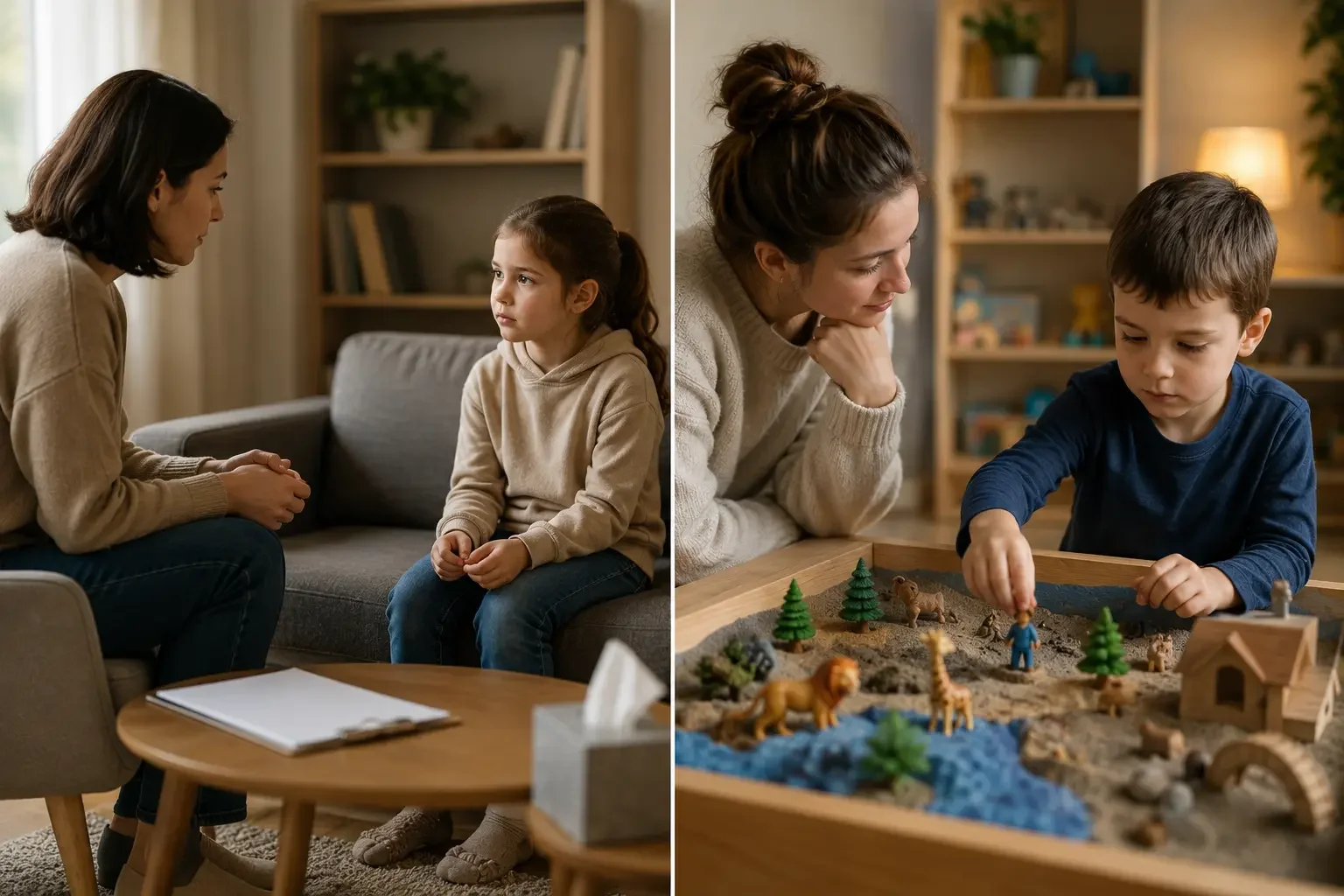
When parents first begin looking for emotional support for their child, they often don’t know exactly what they’re searching for.
They type “child therapist” or “therapy for children” or “child counselling” into a search bar and quickly find a range of approaches that sound similar but aren’t always clearly distinguished. Play Therapy and counselling are often spoken about interchangeably. They aren’t the same thing.
The most important difference is developmental.
Why Traditional Counselling Can Be Difficult for Younger Children
Traditional counselling, in its most common form, relies on verbal conversation. A person talks about their thoughts, feelings, and experiences; insight develops through reflection and discussion over time. This can be genuinely helpful for older children, teenagers, and adults who are able to access their emotional experience through language.
But children are not small adults, and this is where child counselling sometimes runs into difficulty.
Most younger children are not naturally wired to sit in a room and verbally explain complex emotional experiences. Their brains are still developing the capacity for verbal self-reflection, emotional language, and the kind of insight-based processing that adult therapy depends on. When a distressed child is asked “how did that make you feel?”, the honest answer is often “I don’t know” - not because they’re avoiding the question, but because the emotional experience exists at a level that precedes language. Their distress shows up through behaviour, through the body, through withdrawal or outburst - long before it becomes something they can explain.
How Play Therapy Works Differently
Play Therapy is built around this developmental understanding.
Play is not simply entertainment for children. It is one of the primary ways children process experience, communicate emotionally, rehearse difficult situations, and work through fear and uncertainty. Through play, children often communicate symbolically what they cannot yet explain verbally.
A child who cannot say “I feel completely out of control” may repeatedly crash toys together until something internally begins settling. A child who cannot say “I’m frightened of being left” may spend weeks rehearsing separation and reunion through miniature figures. A child who cannot yet name grief may return again and again to themes of disappearance and loss long before they can speak directly about what has happened.
The play is not a warm-up to the real work. It is the real work.
In the playroom, a trained Play Therapist attends not only to what a child says, but to all the ways a child communicates - recurring themes across sessions, symbolic patterns in play, nervous system responses, what a child avoids or repeatedly returns to, the relational dynamics that develop within the therapeutic relationship itself. The therapist isn’t pushing for insight or disclosure before the child is ready. The work centres on creating the conditions - safety, consistency, attunement, relational trust - within which emotional processing can gradually emerge.
Play Therapy can support children experiencing anxiety, emotional overwhelm, trauma, grief, behavioural challenges, school stress, perfectionism, shutdown, relational difficulties, and the pressures that often accompany neurodivergence. What these experiences share is that they tend to live in the nervous system before they become fully accessible through words.
Older children and teenagers sometimes benefit from a blend of approaches - as verbal capacity develops, more direct conversation may become part of the work. But even then, the relational and experiential foundation of Play Therapy is often what makes that deeper exploration possible in the first place.
Which Approach Is Right for Your Child?
For parents trying to decide, the most useful question isn’t “is my child old enough for therapy?” It’s closer to: how does my child naturally process experience?
A child who shuts down during direct emotional conversations, who expresses distress primarily through behaviour, who becomes overwhelmed by questioning, or who communicates more naturally through play and movement than through words, is often better supported by an approach that doesn’t depend on verbal disclosure from the beginning.
Play Therapy doesn’t ask children to explain themselves before they feel safe enough to do so. It creates the relationship within which that safety gradually becomes possible.
Parents are often navigating these decisions while feeling overwhelmed themselves - trying to support a struggling child without fully understanding what may be driving the behaviour they’re seeing. Parent Coaching alongside therapeutic work can help caregivers understand nervous system responses and emotional regulation, and develop ways of responding that deepen connection and safety at home. Because children tend to heal more effectively when the adults around them feel steadier too.
Anya Reddy is a Certified Synergetic Play Therapist and PCI Certified Parent Coach working with children and families in Bangalore and online. Her work focuses on emotional regulation, anxiety, nervous system-informed care, behavioural challenges, and helping children process experiences through play.